
Collaborative AI Agents for your Business
Do everything with one click

The One-Click Magic
Imagine you could run most of your business operations with just one click, where every task from finding leads to closing deals, automating marketing, and streamlining customer support is handled automatically by one team of collaborative AI agents.
With the press of a button, your Sales AI Agent identifies a promising lead and alerts your Marketing AI Agent to prioritize the lead in campaigns. At the same time, it shares the data with your Customer Service AI Agent to prepare for potential inquiries.
When a customer makes a purchase, the Customer Service AI Agent sends onboarding materials, while the Administrative AI Agent updates records, generates invoices, and sends confirmation emails.
Feedback collected by the Customer Service AI Agent is shared across all agents, allowing the Sales AI Agent to refine lead qualifications and the Marketing AI Agent to improve campaign strategies.
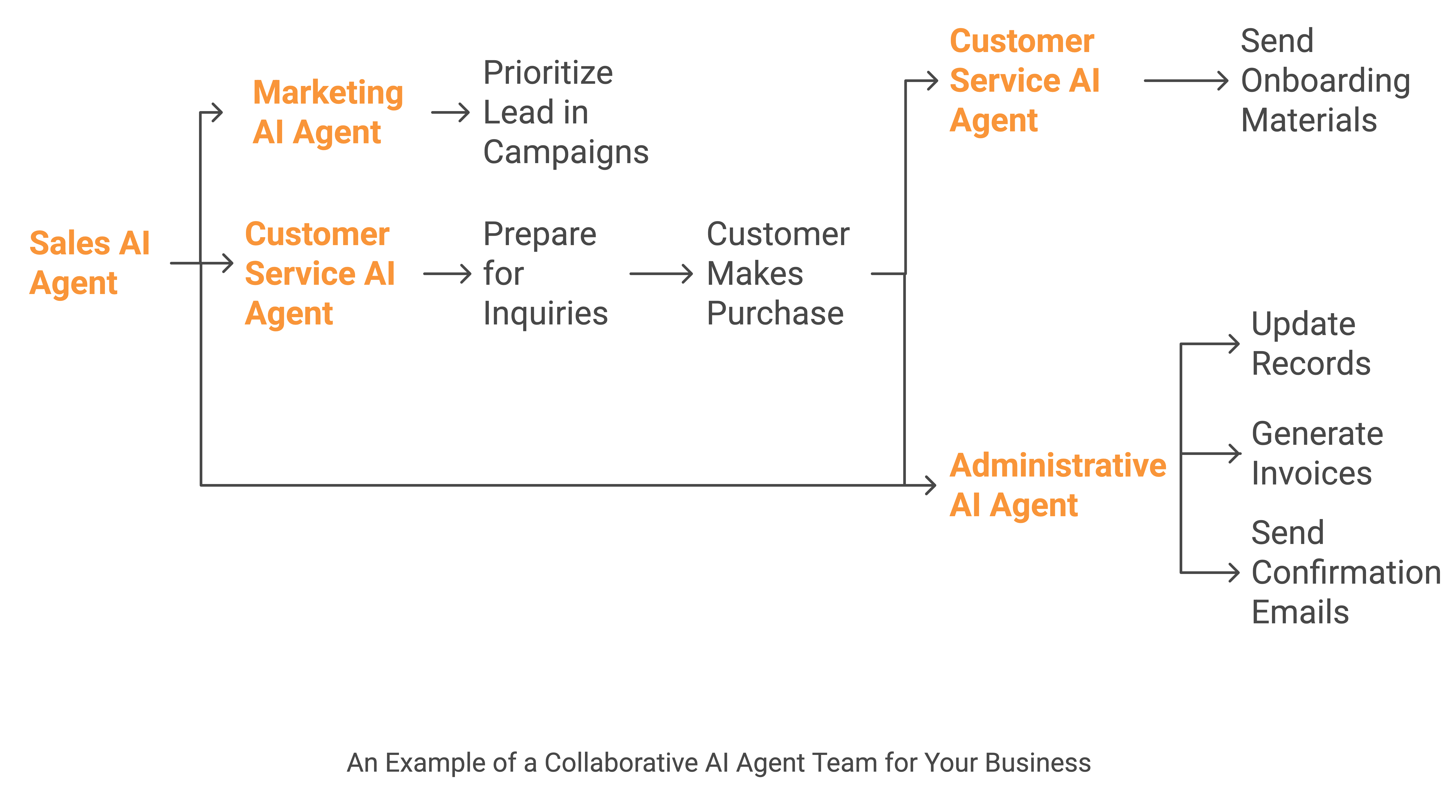
Running your business within this connected ecosystem improves visibility across all aspects of your operations, making it easier to scale, optimize efficiency, and provide highly personalized customer experiences.
This system also has the potential to break down traditional organizational silos and eliminate bureaucratic inefficiencies. By creating a unified and intelligent network, information flows freely and actions are coordinated automatically across all business functions.
When these specialized AI agents from Sales AI to Administrative AI work together, they form what's known as a Multi-AI Agent system.
What is a Multi-AI Agent System?
A Multi-AI Agent System (MAAS) is a collection of AI agents that communicate and work together to achieve shared goals. Each agent is an independent entity capable of perceiving its environment, making decisions, and taking actions, while also communicating and coordinating with other agents in the system.
By combining their unique capabilities and knowledge, agents work together to solve problems beyond the reach of any single agent.
Key advantages of Multi-AI Agent systems include:
Modular Design: Breaking down the system into individual agents simplifies the development, testing, and maintenance processes, making the entire system more manageable and adaptable.
Domain Expertise: Each agent can be designed as a specialist in a specific area, allowing for deep expertise that improves the overall system performance.
Communication Control: Multi-agent architecture gives you precise control over how agents communicate with each other
Here are some interesting characteristics of AI Agents:
1. Emergent Collaboration
In multi-agent systems, unexpected forms of collaboration can arise where agents spontaneously divide tasks, create strategies, or even “negotiate” roles without explicit programming, mimicking teamwork found in nature.
2. Self-Organization
AI agents can form dynamic hierarchies or networks based on task demands, adapting their roles and relationships in real-time without external control.
3. Conflict Resolution
Agents in competitive settings (e.g., resource allocation) often deploy strategies like negotiation, auctioning, or even bluffing to resolve conflicts and reach mutually beneficial outcomes.
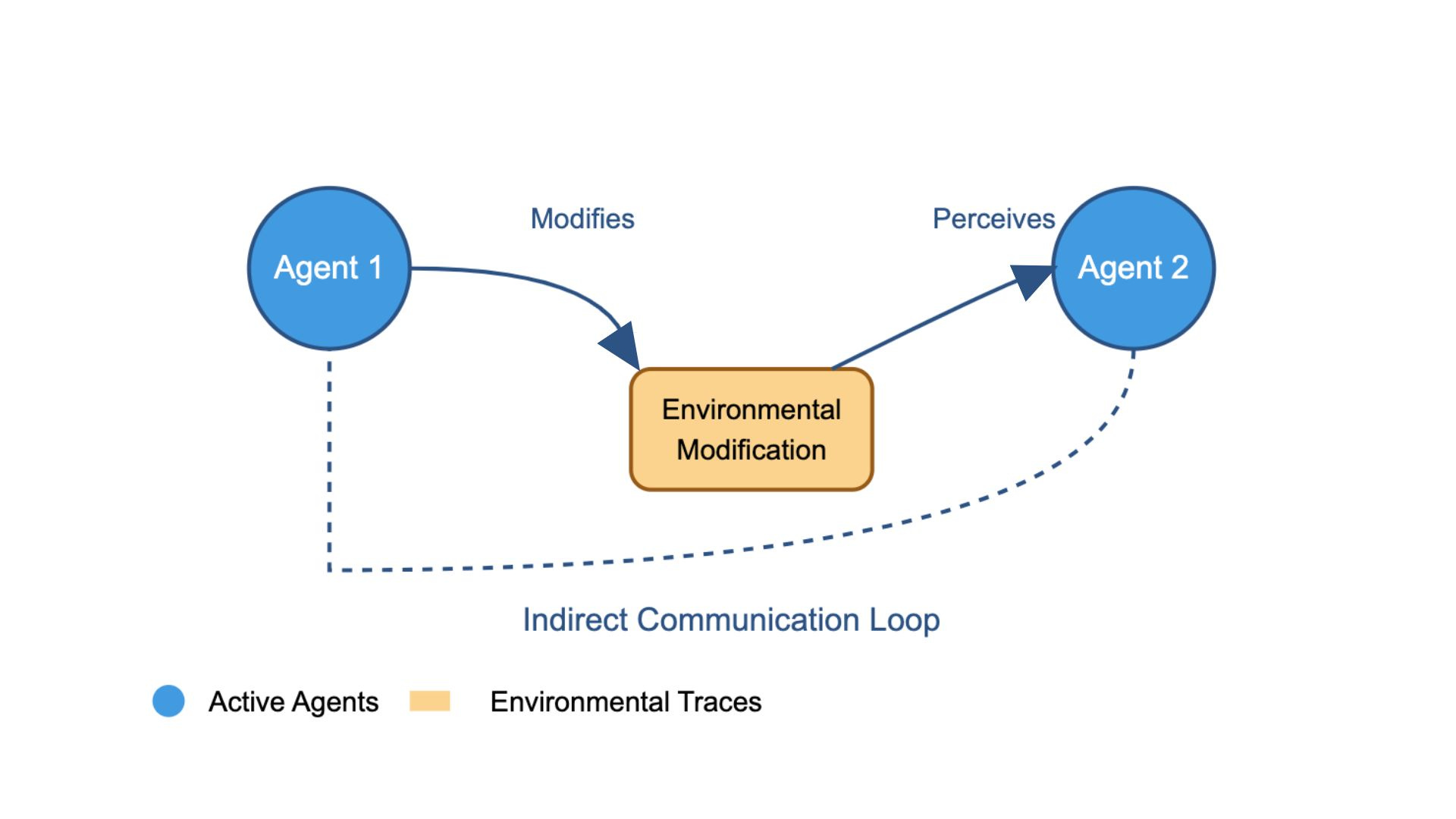
4. Stigmergy
Inspired by social insects, agents sometimes leave "traces" in shared environments (e.g., data points, flags) that influence the behavior of other agents, enabling indirect communication.
5. Imitation and Social Learning
Beyond individual learning, agents can observe and mimic the behavior of other agents (or humans), acquiring skills without direct training.
Multi-AI Agent Architectures
Here are the main types of multi-agent architectures:
Centralized Architecture (Supervisor)
A central "supervisor" agent controls and coordinates the actions of all other agents in the system. This structure is beneficial for centralized decision-making processes.
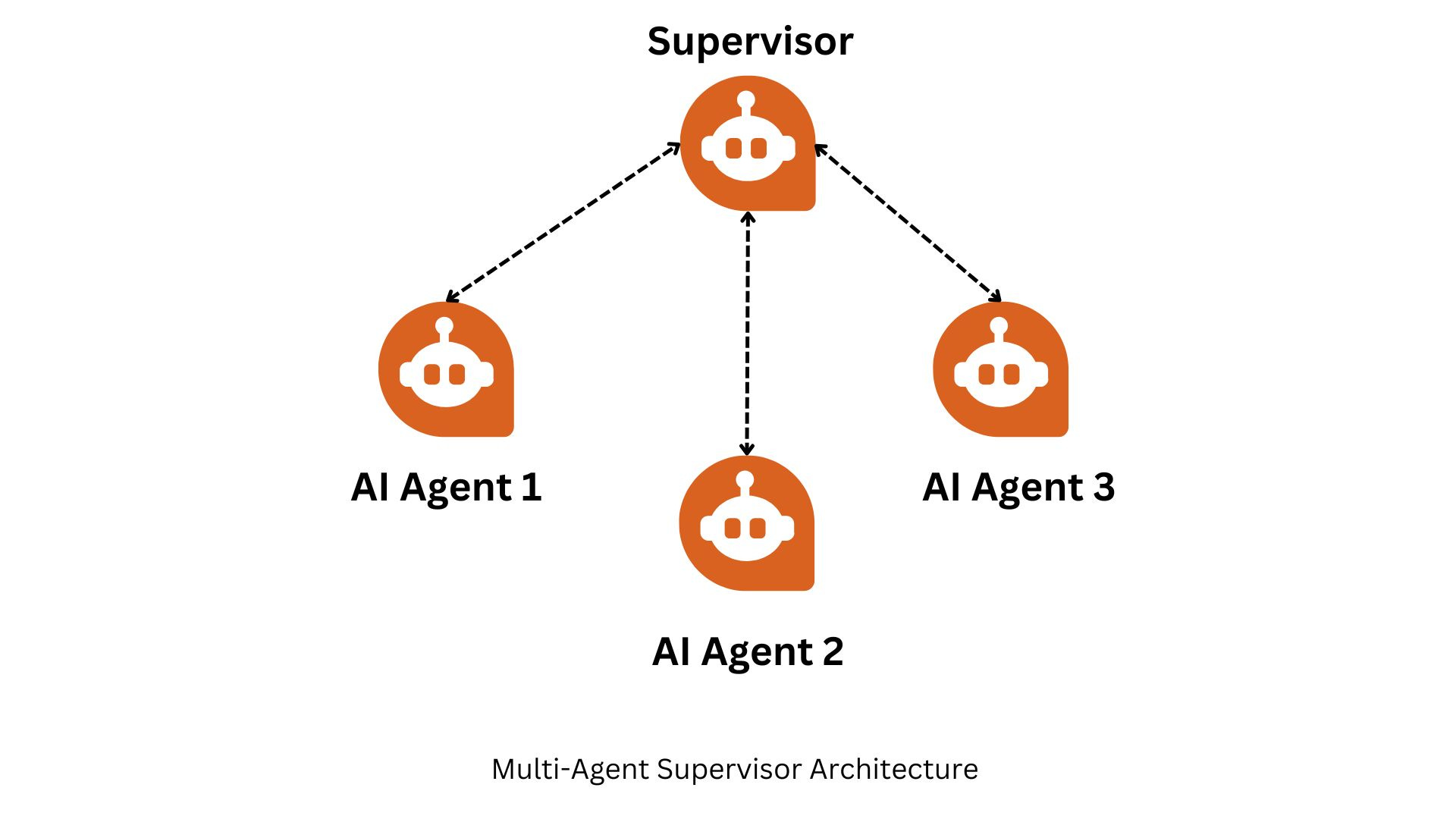
Best use: Scenarios requiring clear task delegation and modularity.
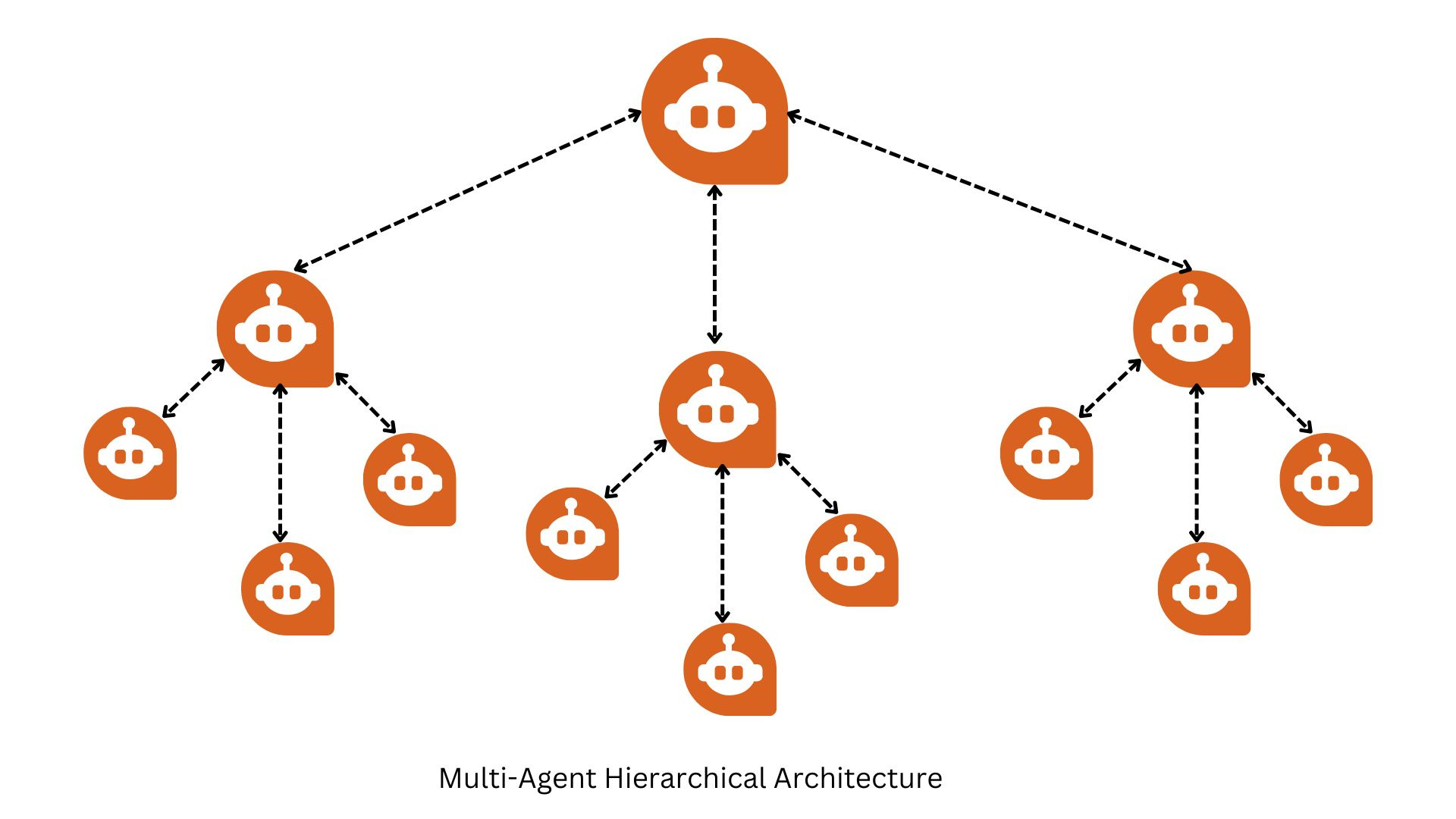
Hierarchical Architecture (Supervisor of Supervisors)
This involves a supervisor agent overseeing other supervisors, creating a multi-level control system (supervisor of supervisors). It's a generalization of the supervisor architecture, allowing for more complex control flows.
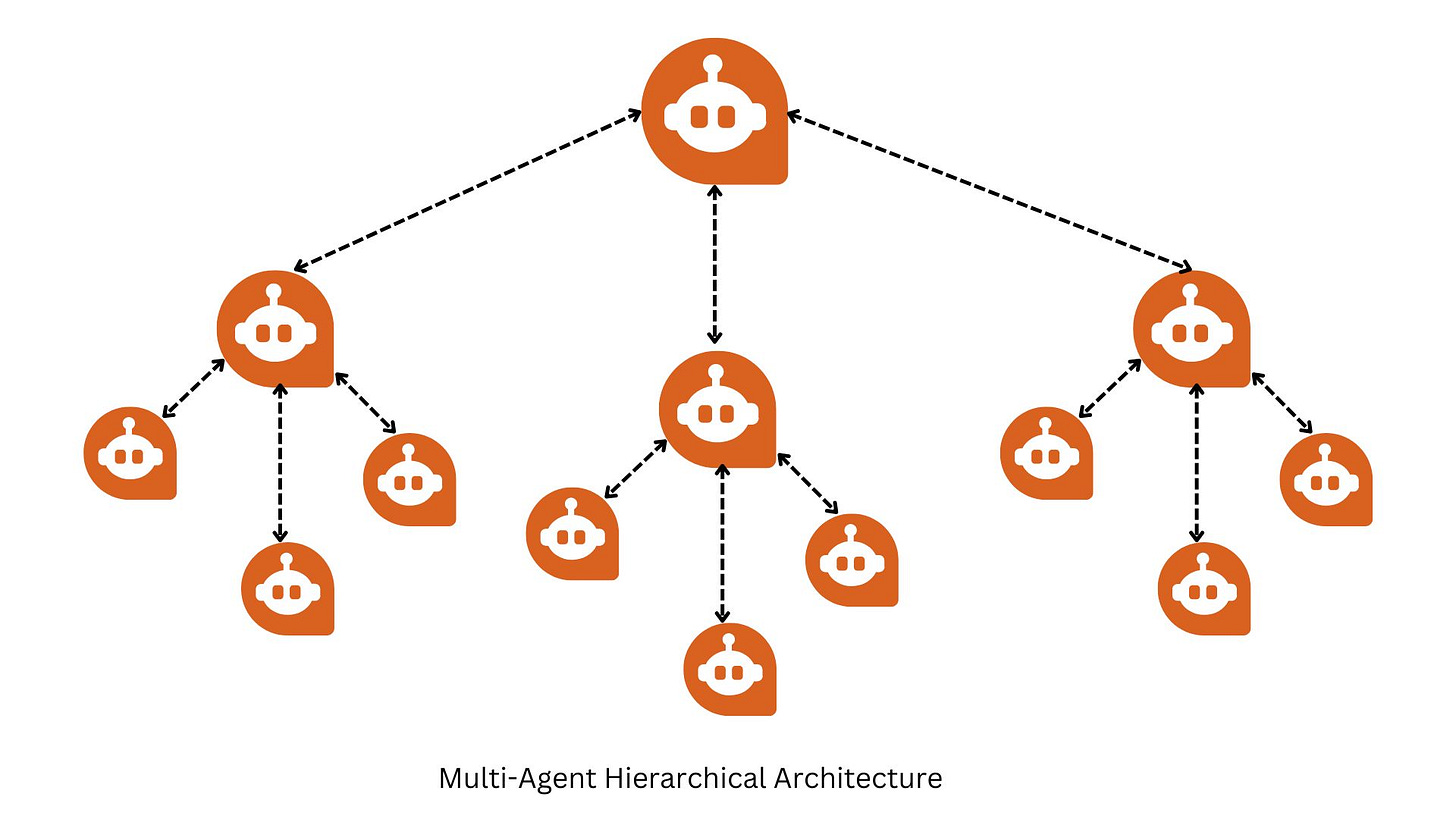
Best Use: Suitable for large systems with multiple domains requiring clear grouping and task hierarchy.
Custom Architectures
These are tailored, domain-specific systems that combine elements from other architectures, often preferred for production use. They are designed to address unique requirements and include highly customized communication patterns.
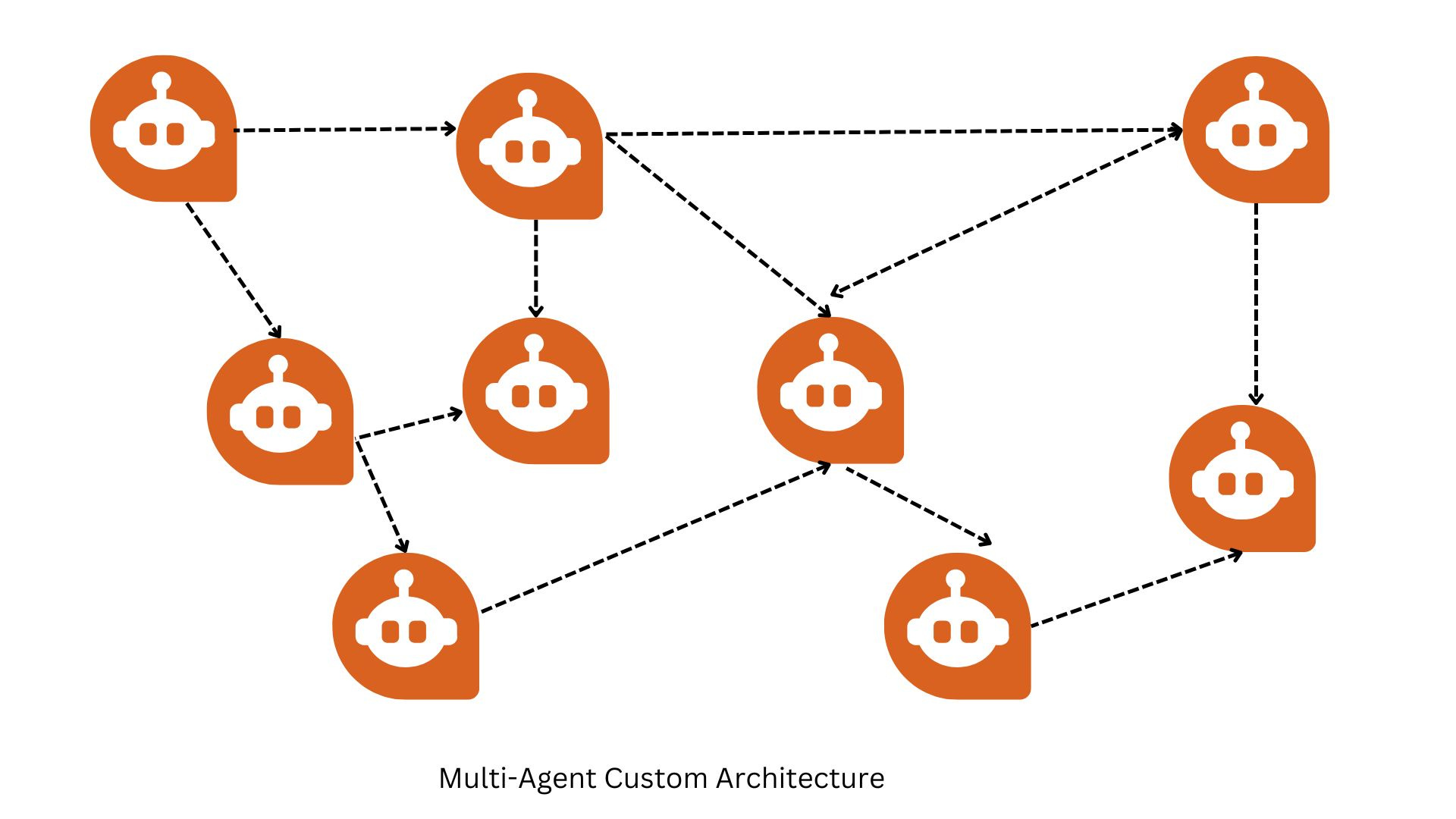
Best Use: Complex, high-stakes applications where standard architectures are insufficient.
Swarm Architecture
Inspired by natural swarms like ants, bees and birds, swarm agents exhibit simple behavior locally, resulting in emergent global behavior.
AI agent swarm architecture is a decentralized system that allows multiple agents to collaborate without central control. It prioritizes self-organization over strict domain-specific customization.
Agents have no global knowledge but achieve coordination through local interactions.
Highly scalable and robust to failure.
Which Architecture is Right for You?
Choosing the right architecture depends on your system's goals, complexity, and scalability requirements. Here’s a quick guide to help you decide:
Centralized Architecture:
Use if: You need clear task delegation, centralized decision-making, or you're working on a smaller-scale system where simplicity and control are priorities.
Examples: Simple workflow systems, task queues.
Hierarchical Architecture:
Use if: Your system spans multiple domains, requires a clear task hierarchy, or needs a structured control flow across agents.
Examples: Large organizations, multi-tiered robotics systems.
Custom Architectures:
Use if: Your application has unique requirements that don’t align with standard frameworks, and you need flexibility to design domain-specific workflows.
Examples: Financial trading platforms, complex industrial systems.
Swarm Architecture:
Use if: Scalability, resilience, and emergent behavior are critical, and your application benefits from decentralized, self-organized systems.
Examples: Swarm robotics, distributed sensor networks, optimization algorithms.
If Unsure, Start Simple
Start simple by beginning with a single agent or a supervisor model, which provide a solid foundation and is easier to manage for smaller systems. When scaling or moving to production, custom architectures often outperform off-the-shelf solutions.
Looking Forward
Collaborative AI agents will redefine how we operate and scale our businesses and even create new business models that were previously impossible. The real transformation will come from these agents' ability to learn from each other and combine their capabilities in novel ways.
Stay tuned for the next part of this series, where we’ll dive deeper into how to build your own Collaborative AI Agent system for your business. We will also explore the key differences between popular AI Agent Platforms and Frameworks, helping you decide which is best suited to your needs.
What Questions Do You Have About AI Agents?
I’d love to know your thoughts! Please feel free to share your questions or comments below.