

Hi Everyone,
I just got back from NVIDIA GTC 2025 conference, and I can't wait to share everything with you.
This post focuses on the current state of AI agents, but there’s a lot more coming your way. Soon, I’ll be sharing insights on :
Advanced Machine Intelligence (AMI) and World Models from Yann LeCun
The intersection of AI and Energy
Why Physical AI is gaining traction
Latest applications of AI in Healthcare
If you’ve been wondering where AI agents stand today and what it really takes to get them into production, I've got you covered. I’ve been following the space closely, and after Harrison Chase’s talk, I’ve pulled together what you need to know.
Harrison Chase, CEO and co-founder of LangChain delivered one of the most insightful talks on the current state of AI agents, what’s working, what’s not, and where the technology is heading next.
Let’s get started.
From LLMs to Agents: How We Got Here
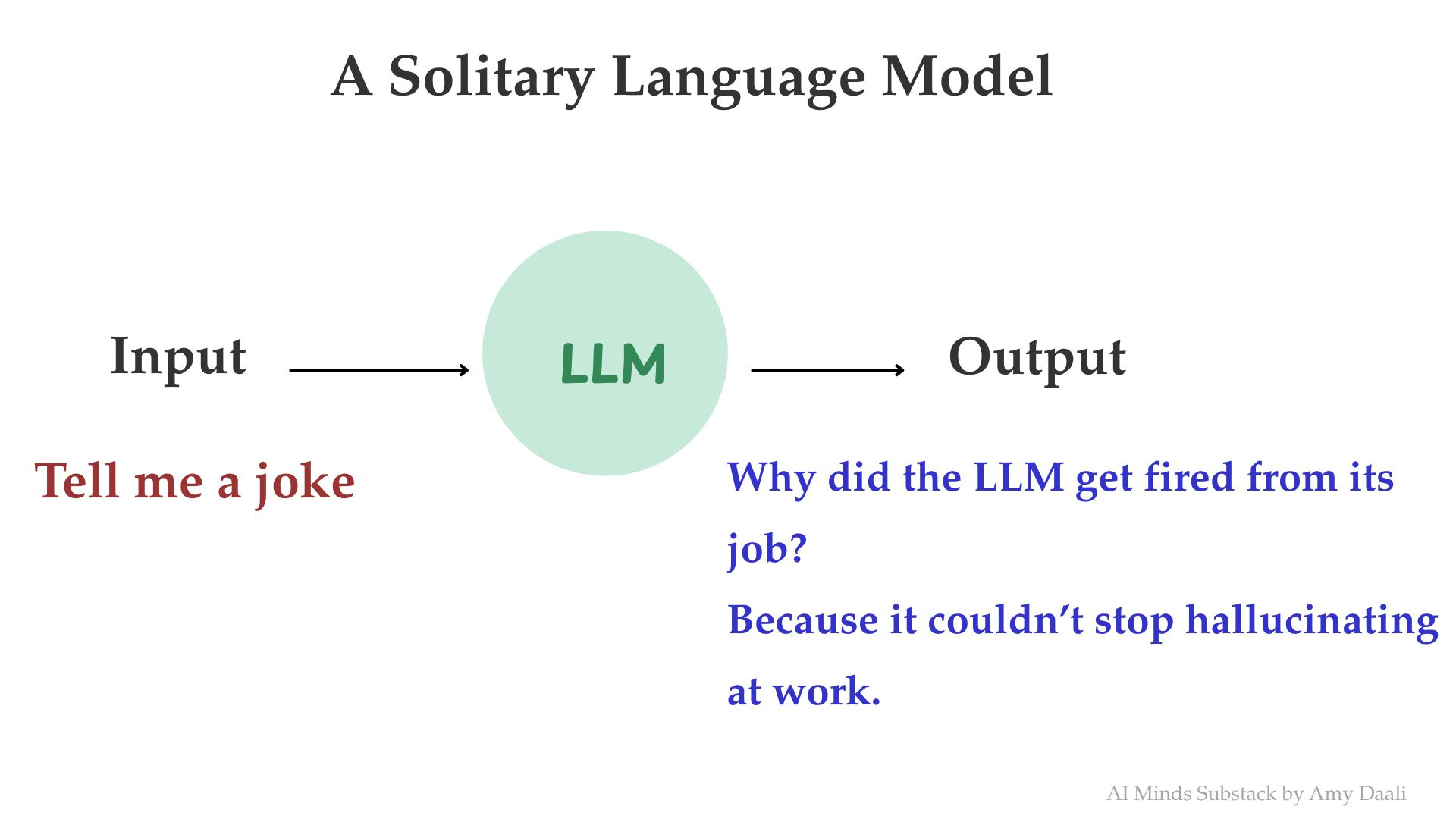
Large Language Models (LLMs) like GPT-4 are amazing at generating human-like text. But as the name “solitary” suggests, they can only do so much on their own.
An LLM is like a brilliant writer stuck in a room with no tools, no internet, and no memory of past conversations. It can produce impressive output but it has no way to interact with the world around it.
They can:
Write, answer, translate, and summarize…
But they don’t know your files, your tools, your workflows, or your logic.
For LLMs to be more useful and provide greater value, they need to:
Be connected to external data sources (like PDFs, websites, or databases)
Decide what should happen first, second, third (like fetching data before answering).
Interact with tools and APIs
Remember context across interactions (memory)
LLMs needed a way to connect to the real world. For this reason, many LLMs use a predetermined control flow, which is referred to as a “Chain.”
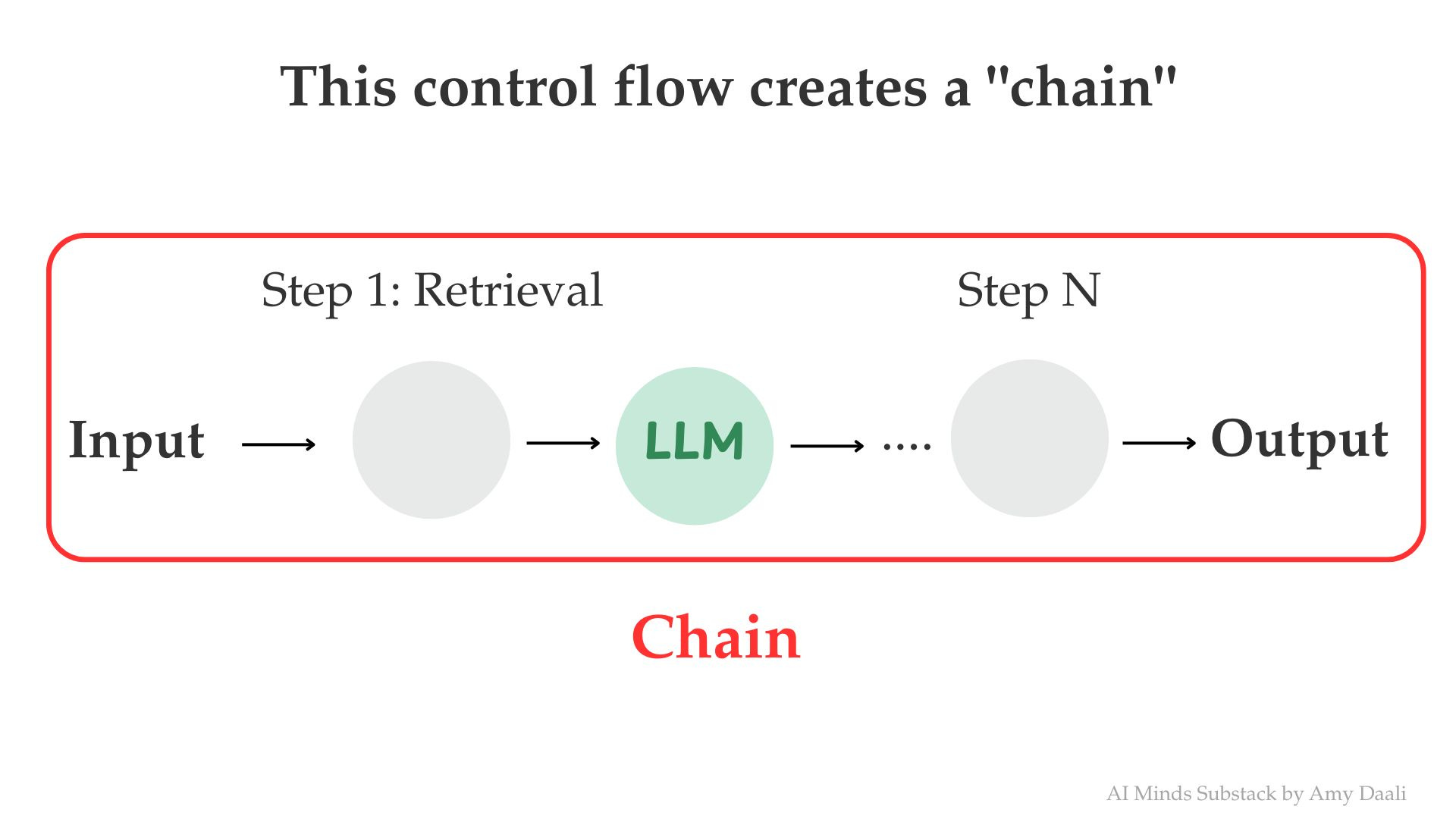
A chain is a sequence of steps that combine LLMs with other components, such as prompts, tools, memory, or APIs to accomplish a complex task.
One of the most popular frameworks built to make this possible is LangChain. It allows developers to design multi-step reasoning workflows where the model can retrieve information, call functions, and use memory.
There are situations when we don’t want to predefine every step an LLM should take. We want it to decide for itself. Maybe it needs to choose the right tool, ask a follow-up question, or try a different approach if its first answer didn’t work. In these cases, a fixed chain of steps isn’t enough.
And that’s how AI agents were born.
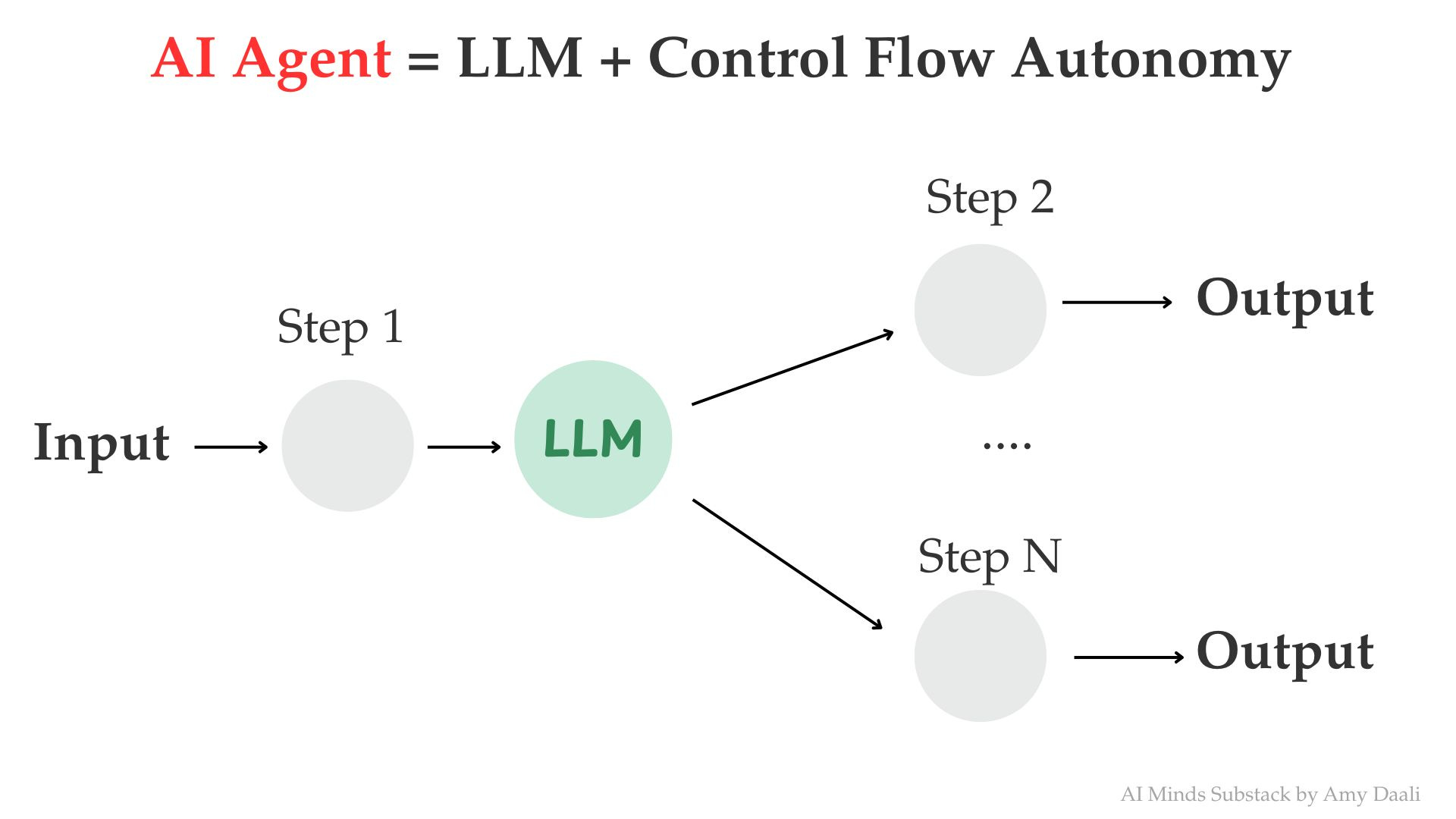
AI Agents are given a goal, a set of tools, and the freedom to decide what to do next. They use reasoning to plan actions, interact with APIs, and adapt based on results, much like a human assistant would.
What Makes AI Agents Production-Ready?
There are 4 key areas where developers spend most of their time when building production agents:
Planning
Reliability
UX (User Experience)
Memory
Here’s how things are evolving in each area.
1. Planning
One of the most persistent challenges with agents is long-horizon planning. Getting agents to handle multi-step tasks without falling apart.
Most LLMs can handle a single tool call, but when asked to string together multiple steps, their performance drops.
Here are several breakthroughs that have helped:
Explicit Planning: frameworks like the Tree of Thoughts let agents explore multiple paths before choosing one (like a chess player mapping out moves).
Reflection: Agents review their own actions (or get reviewed by another LLM) to improve over time.
Flow Engineering: Custom workflows designed for specific domains, no one-size-fits-all. Coding agents don’t plan like writing agents.
Reasoning Models: Specialized LLMs ((like OpenAI's or DeepSeek's) trained for step-by-step strategic thinking, used in tandem with faster models for execution.
Graph-Based Orchestration: Tools like LangGraph introduces stateful, multi-step workflows by modeling agents as graphs with memory, branching, and looping. This makes it possible to build agents that can persist state and operate in more structured and predictable ways, ideal for production environments.
2. Reliability
While AI agents are useful, they often struggle with reliability. The problem isn’t fully solved yet, but meaningful progress has been made in identifying the tools and techniques that can improve it.
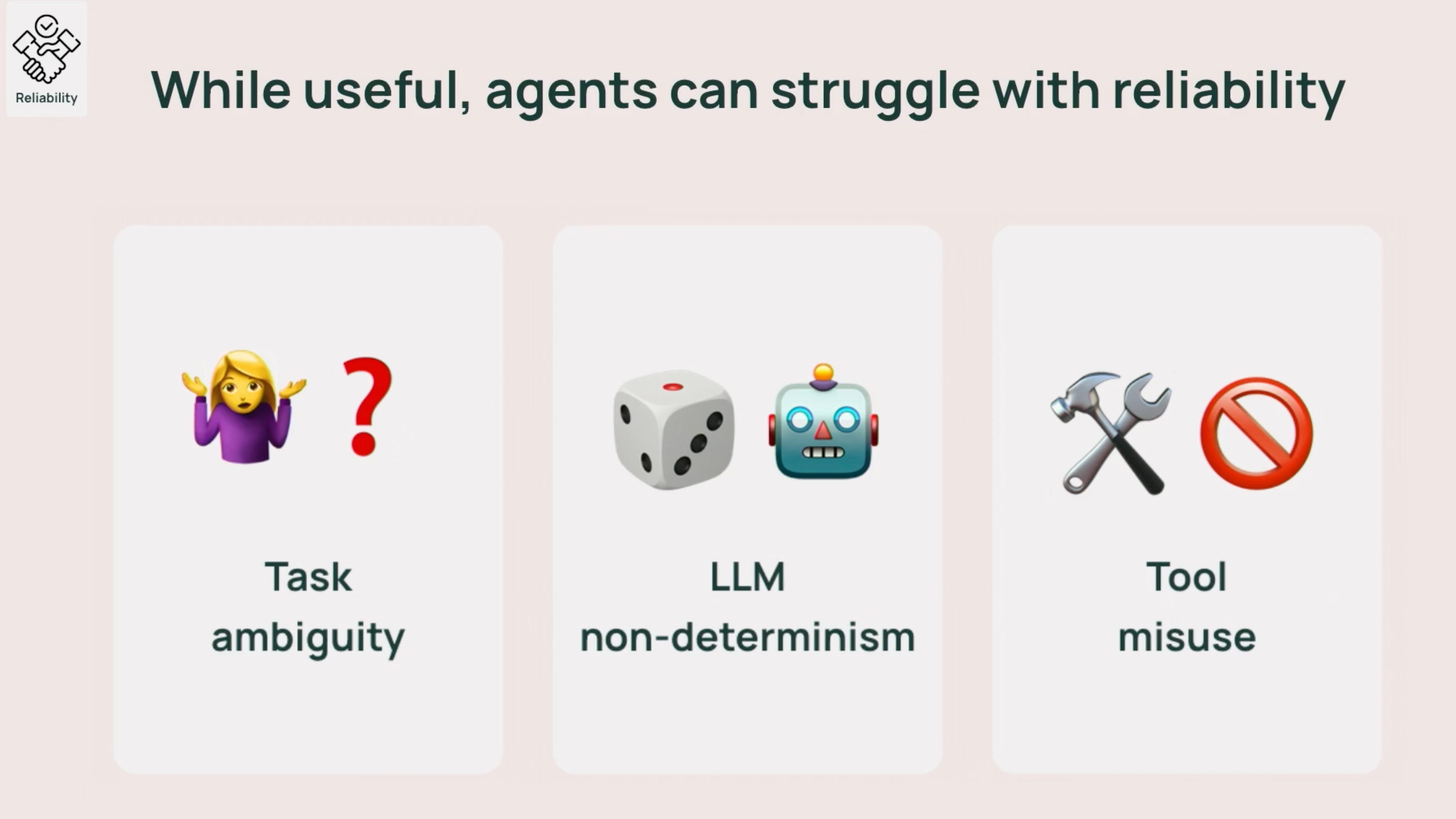
There are three main reasons why agents can behave unpredictably or fail:
Task Ambiguity
Agents often struggle when instructions are vague or under-specified. If the task isn’t clearly defined, the agent may make incorrect assumptions or take the wrong approach.
LLM Non-Determinism
Language models are inherently probabilistic. Given the same prompt, they can produce different outputs each time. This randomness can lead to inconsistent behavior in agents, especially in multi-step tasks.
Tool Misuse
Agents sometimes call the wrong tools, use tools incorrectly, or fail to understand when a tool is appropriate. This can cause execution errors or derail the task entirely.
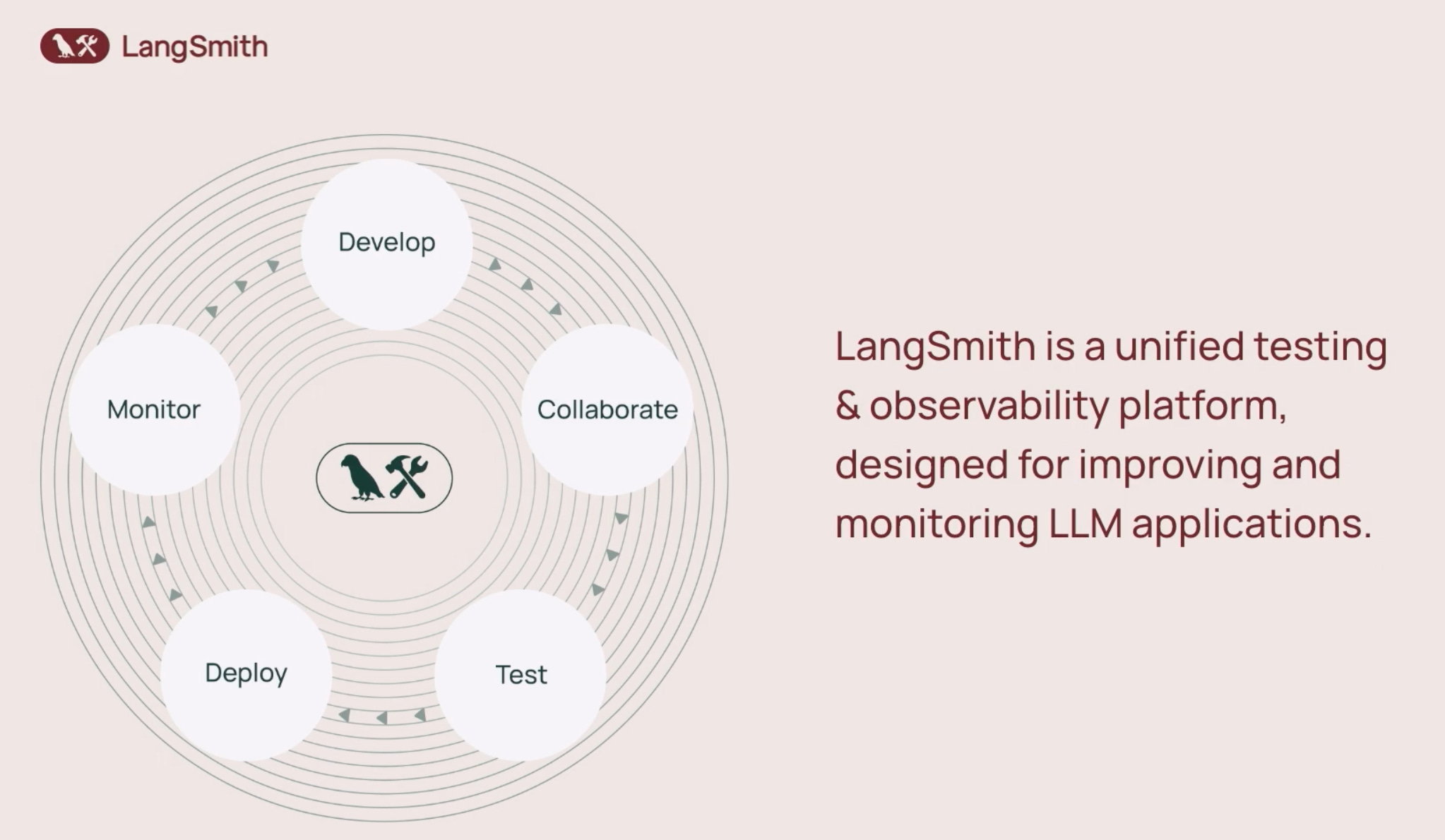
Although there is no silver bullet, there are tools like LangSmith. A developer toolset for observability, traceability, and evaluation. It helps devs see what the agent was thinking, what context it had, what tools it used, and where things went wrong.
3. UX: The Human-Agent Interface
The classic chat interface works very well, but we’re seeing other interfaces like:
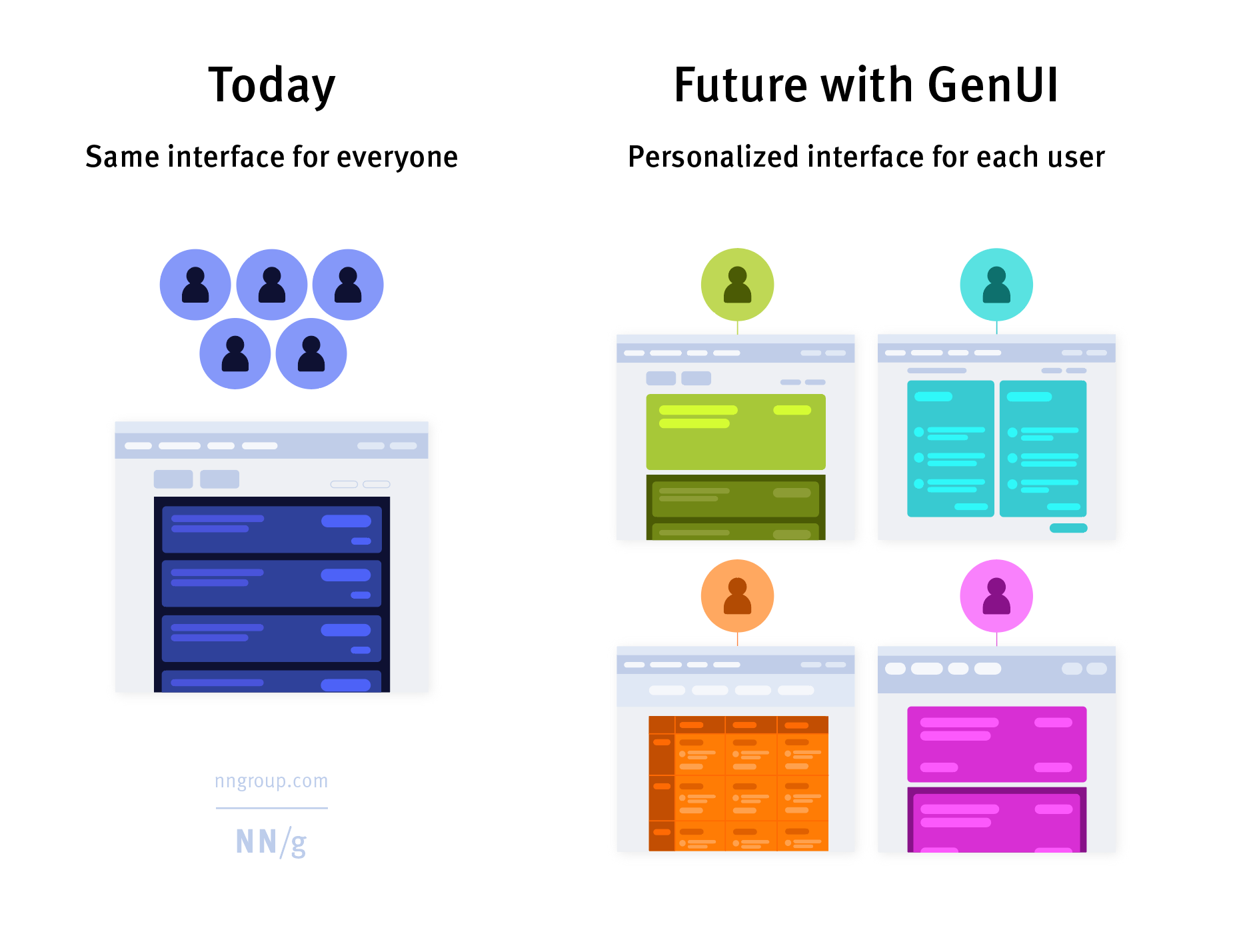
GenUI: Generative UI blends the strengths of front-end development with the capabilities of generative AI. Integrating conversational interfaces with dynamic UI components like carousels, dropdowns, and forms.
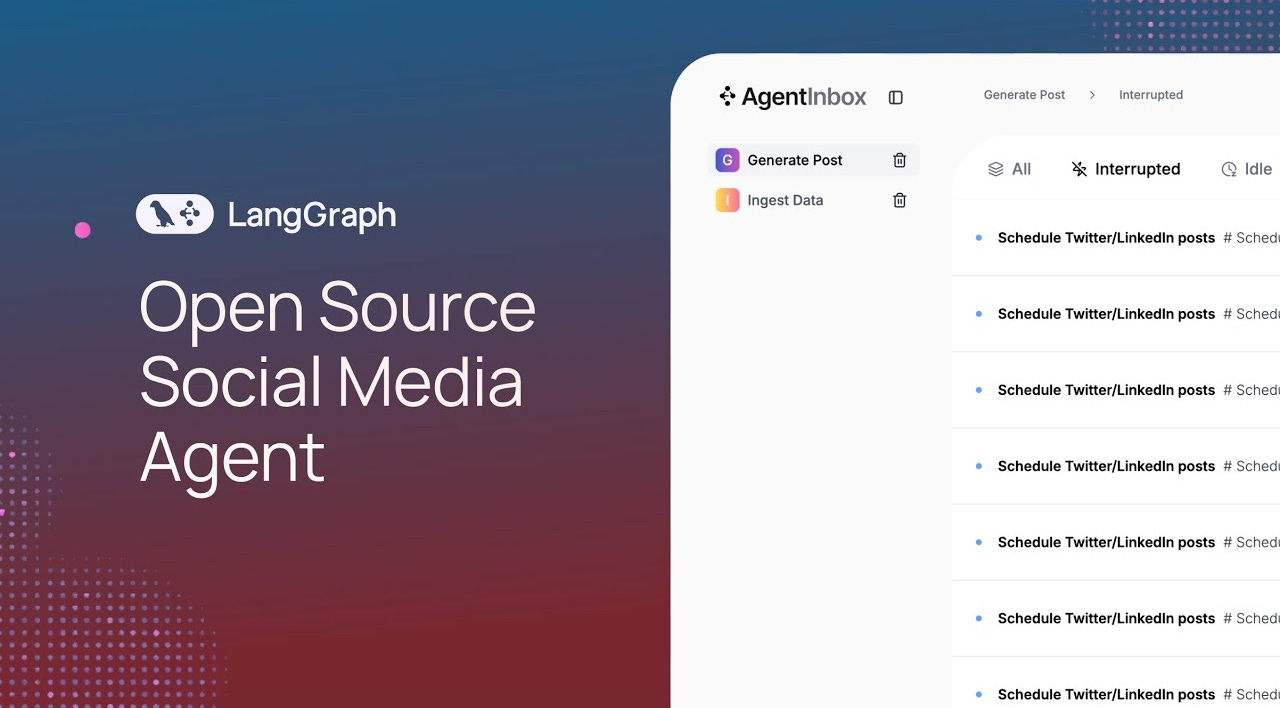
Agent Inbox: a centralized “inbox” that displays the actions AI agents want to take. It allows us to review, approve, and respond to tasks that require human input.
4. Memory
Memory in AI agents is a hot topic, but it’s still in its early stages and remains an area of active research. One helpful way to think about it is by comparing it to human memory, which can be categorized into three types.
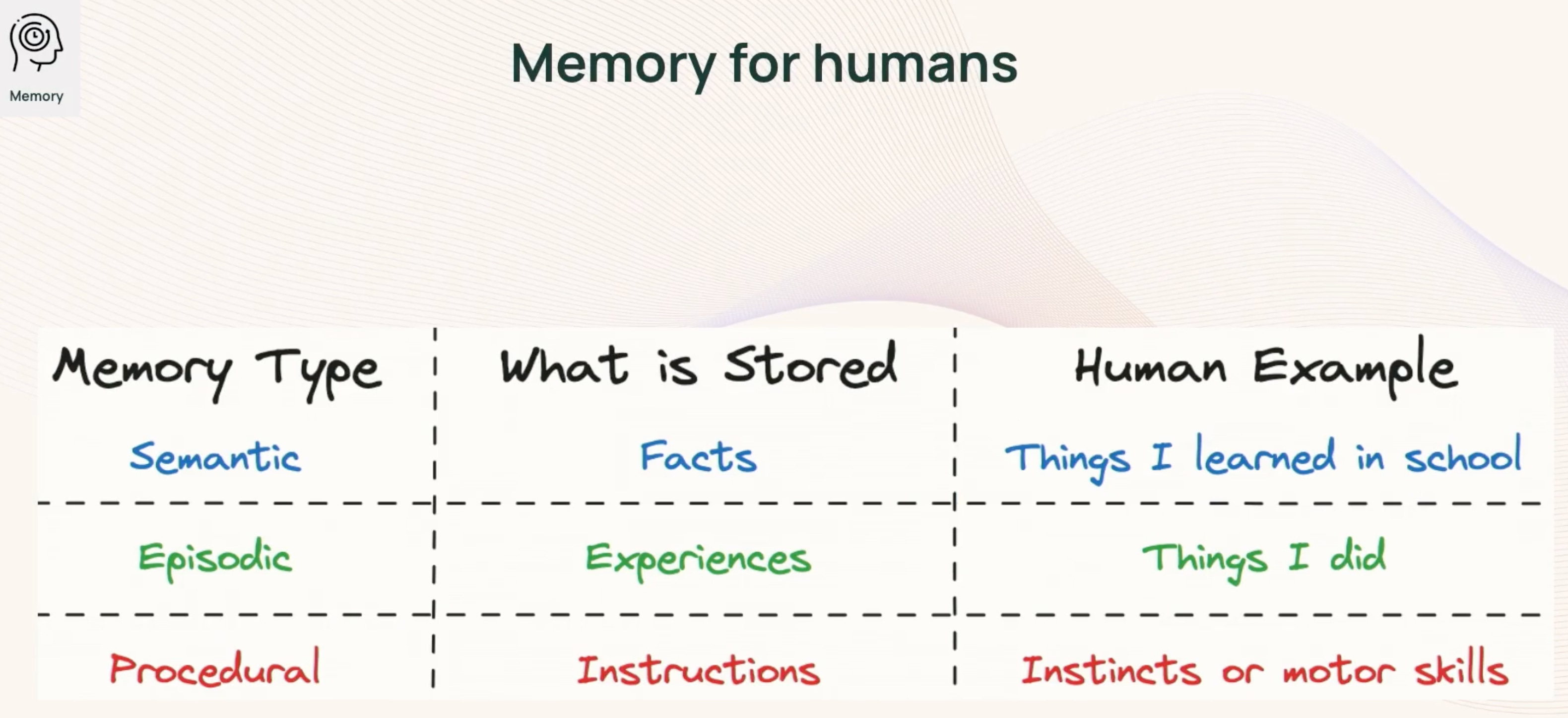
Semantic Memory (storing facts)
In agents, this could be persistent facts like a user’s name, preferences, or company details. Often stored in vector stores or key-value stores.
Episodic Memory (storing experiences)
For agents, this might be a log of previous interactions or decisions. Useful for reflecting, reasoning, or debugging.
Procedural Memory (storing how to do things)
In humans, it's muscle memory. In agents, it's the system prompt or policy. Instructions that guide the agent’s behavior, tool usage, and flow logic.
So, what’s next for AI agents?
While AI agents seem to be everywhere, we’re still in the early days. There’s much to improve, especially around memory and reliability. Today's AI agents are like toddlers with PhDs, they know quantum physics but will crash if you ask them to open a Google Doc :).
Deploying production-ready agents will require specialized infrastructure built for their unique needs: long-running tasks, bursty workloads, and the occasional unpredictability of LLMs. Human-in-the-loop workflows will remain essential to catch errors, guide behavior, and ensure trust.
We're also going to see a shift from single agents to collaborative Multi-Agent Systems, where agents are built by different teams or organizations working together toward shared goals.
If 2024 was about proving that agents could work, 2025 is about proving they can scale reliably, securely, and at enterprise-grade levels.
I hope you enjoyed this article!
If you enjoy my content and want to participate in deeper, ongoing conversations like this, connect with me through my new community here 🎉 :
Thank you for reading my post! Exciting things are coming, so stay tuned for the next one!